When Literature Becomes Action: Professor Lucio De Capitani on Environmental Narratives
Can literature help change the future of our planet? Professor De Capitani argues that literature and the arts can help reshape how we think about the environment.
By Agnese Rossi
Today I’m at Ca’ Foscari University of Venice to speak with Professor Lucio De Capitani about how literature can serve as a vehicle for environmental awareness and education. De Capitani’s background is in English studies, with a specific focus on Anglophone Literatures - the broad field of literature written in English in various parts of the world. More recently, his research has centered on speculative fiction and ecocriticism, and he now works within the wider field of the Environmental Humanities.
First of all, Professor De Capitani, thank you for taking the time to speak with us today. It is a common assumption that ecology and environmental awareness mainly belong to the scientific field, yet the work you do at the University suggests otherwise. So in what ways do you think literature can contribute to the environmental discussion?
Thank you for having me. I think that literature, and the arts in general, can contribute in at least two ways. One is to change the imaginary of how we think of the environment, not just as a resource but as something we are part of and need to coexist in. This is something that narrative forms, but also art, can help us understand, to get away from the mainstream assumption of our culture that we are kind of above nature or in control of it. That’s one thing. The other thing is a bit more concrete, I think, and perhaps a bit more politically inclined. Of course it’s important to change our mindsets, but in order to have an effect on the planet environmental issues need to be politicised. Literature brings concrete stories into our imagination, therefore becoming a resource for us to act politically in an environmentally sustainable way.
Another thing I’ve noticed in these literary works is their ability to bring the issue closer to us. Although it is increasingly difficult to ignore these realities today, some people still do not perceive climate change as an everyday issue - something that requires urgent action. So, do you think literature can also help bring people closer to these issues by giving voice to the communities that experience the effects of climate change on a daily basis?
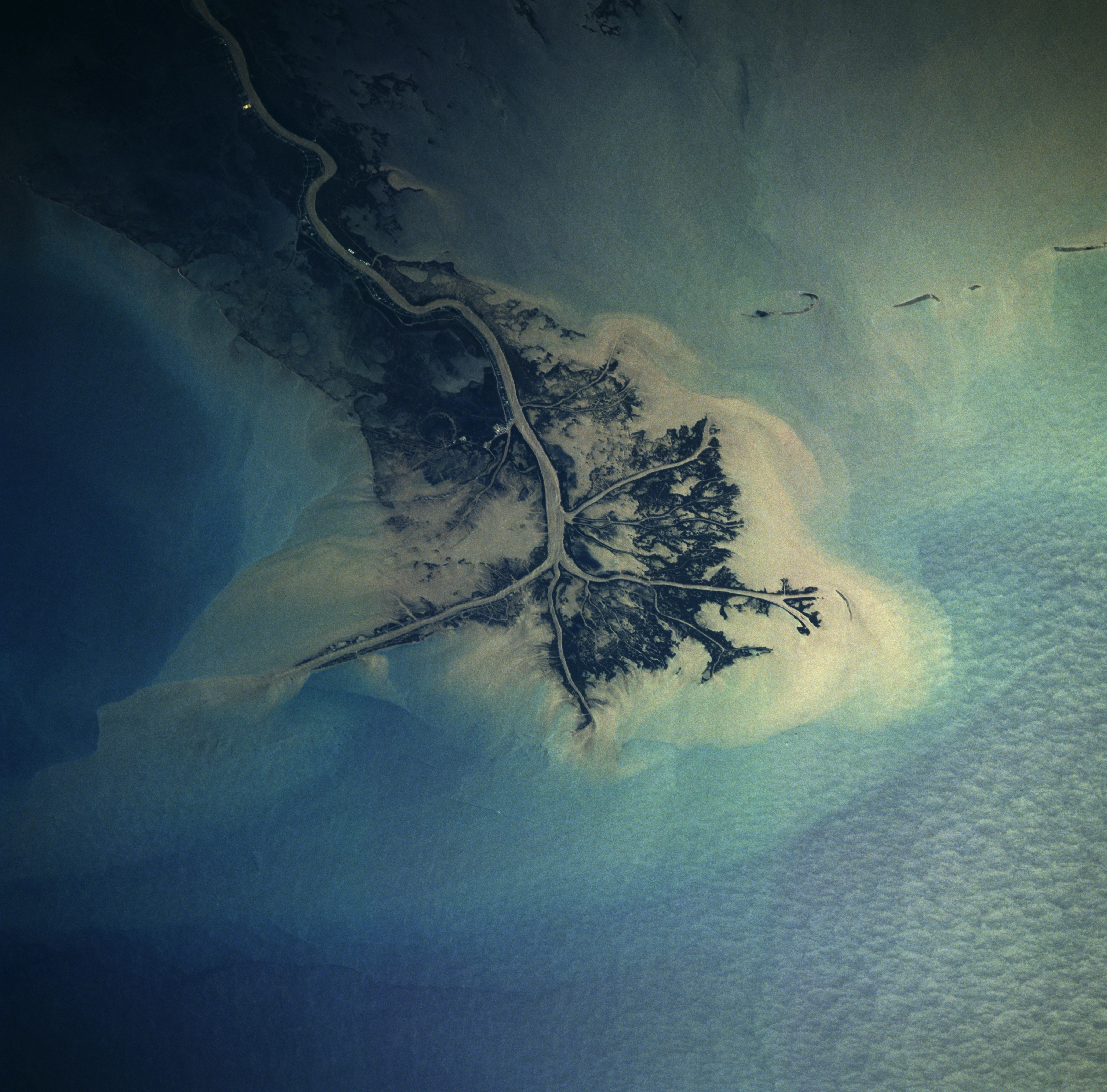
Absolutely. I’ve been recently working with some schools in Veneto, discussing ecological issues and climate change. A very common reaction by those students was to feel grateful that they’re not living in these particular conditions and, to an extent, this is true because they are sheltered. But it’s also kind of telling that they consider themselves fundamentally protected from disasters, whereas it’s not that those disasters are very far away from us. So I think that it’s narratives and the arts that play a role in bringing the effects of climate change closer to home. I think, again, in two ways. They can tell stories of communities that are experiencing the effects of climate change more brutally - climate migration, utterly complete destruction caused by extreme weather events, or, if we go to speculative fiction, imagining dystopian and postapocalyptic futures that could actually become our reality very soon (and maybe for some they already are). But I also think that precisely because it is important to see this as something that’s very close to home, it’s important to tell stories that are really not that far away from us. I’m thinking for instance of the Italian writer Wu Ming 1 specifically, who has been working a lot on the Po Delta, for instance with the novel Gli Uomini Pesce. If you look at the Po Delta, it’s not only Venice that risks being flooded in the coming decades, but the entire area - a reality whose consequences we may still not fully grasp, even though it’s much closer than we think.
And also many times we don’t even realize the impact our actions can have on the environment, even though it’s becoming increasingly difficult to ignore them - especially in the last years characterized by climate disasters and the tragedies reported daily on the news. This surely has also an emotional impact, especially on young people, who are experiencing more and more anxiety and uncertainty when imagining their future on this planet.
In this context, how important is it to use a language of hope in environmental narratives? How can literature communicate hope and inspire action, rather than simply generating despair?
I think it could be very easy to give in to despair as a coping mechanism. If you decide that there is nothing you can do and that the planet is doomed, it becomes very easy to opt out and stop engaging with the problem. In a way, it can turn into a kind of nihilism. And that’s the mirror image of a very naive form of hope, where you assume that things will be solved anyway, that other people are working on it and everything will eventually work itself out. I think both these attitudes are very passive and end up making us complacent.
Instead, I think it’s very useful to find reasons for hope that force us to do something. What you do exactly might depend on each individual’s situation, but I do think that it’s very important to engage in environmental issues from a very public and political standpoint, which is arguably more impactful or at the very least allows to create forms of connection and community that can have a multiplicative effect.
Something that literature is very good at communicating is that, again, climate and environmental issues are inevitably intertwined with other forms of struggle. In a way this makes them extremely complicated, because it’s not just one simple problem that can be fixed, but at the same time it means that you have more allies that you can think of when you’re engaging with these kinds of struggles; so you can find converging initiatives in unexpected places, which I think is a good reason for hope.
Of course, either despair or passive hope are to be avoided, and it’s fascinating how literature can foster a more active sense of responsibility and awareness. Thank you very much, Professor De Capitani, for your time and for sharing your insights with us today.
Agnese Rossi
Journalistic Content Intern
Agnese Rossi supports public engagement at Ozeaon, helping strengthen the company's audience-facing communication, community outreach, and public visibility.
Her role contributes to how Ozeaon engages external audiences through accessible storytelling and mission-aligned content.
- Journalism
- Communications
- Public Engagement