The Hidden Cost of a Warmer Sea: Climate Change and Marine Life at Risk
Feeling warm water at the beach? That small surprise is actually a window into rising ocean temperatures and the deeper story of a warming planet.
By Agnese Rossi
As summer settles in and temperatures begin their steady climb, thoughts across the country are turning, as they do every year, to the coast. For millions, the season brings with it a familiar and irresistible ritual: packing away winter routines in favor of sun-drenched afternoons, the rhythmic sound of waves, and the simple pleasure of a swim in the cool, salty sea. Beaches, once quiet and windswept, are once again filling with color and life, as families, couples, and solo travelers alike begin planning their long-awaited getaways along the seashore. A particular kind of longing arrives with the first truly hot days of the year - a craving for a relief that only a dive in the cool sea can provide. Finally, you made it to the beach and can’t wait to take that plunge. But what if the sea is not as cool as you thought it would be and instead you find it to be disappointedly warm? And is this simply an inconvenience for your holidays or does it point to something larger?
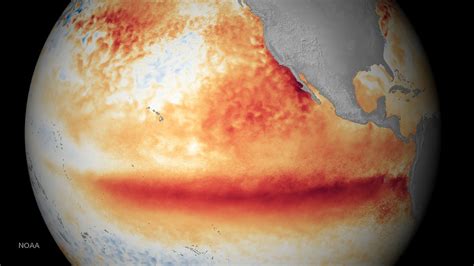
Sea surface temperatures are one of the most powerful forces shaping global climate and weather patterns. You may have heard of the phenomenon called ‘El Niño’, which was declared active by NOAA (the National Oceanic and Atmospheric Administration) earlier this summer. This phenomenon occurs when the trade winds that normally blow steadily from east to west across the Pacific begin to weaken. Under normal conditions, these winds push warm surface water towards Asia, allowing cooler water to rise up. But when the winds falter, that warm water moves eastward instead, pushing sea temperatures well above average. The result is a shift that can be felt not just in the ocean, but in weather patterns across the entire globe.
Climate scientists warn that a ‘Super El Niño’ - one where Pacific sea temperatures rise more than 2°C above average - could bring severe and uneven consequences around the globe. Regions such as East Africa, northern India, northeastern Brazil, Australia, and Indonesia face heightened risk of drought, while California, parts of South America, the Pacific, Sri Lanka, and east-central Africa could see the opposite: heavy rains and flooding. This climate pattern known as ENSO (El Niño-Southern Oscillation) has also been linked to changes in the intensity of hurricanes and cyclones worldwide. Experts stress that this is foreseeable, giving governments and communities a chance to prepare, rather than simply react, when extreme weather arrives.
While the ENSO phenomenon is a naturally occurring climate cycle and there is no definitive agreement in the scientific community, studies regarding the relation between global heating and El Niño events are being carried out. NASA notes that although El Niño itself is not caused by climate change, it frequently coincides with the hottest years on record, as enormous amounts of heat rise from the Pacific into the atmosphere. ‘Major El Nino events - such as 1972-73, 1982-83, 1997-98, and 2015-16 - have provoked some of the great floods, droughts, forest fires, and coral bleaching events of the past half-century’, states NASA in the Earth Science page of its website.
Yet El Niño is only one part of a much larger picture. Beneath the short-term swings of this single climate cycle lies a steadier, more persistent trend: the world’s oceans are warming, year after year, as they absorb the vast majority of the excess heat trapped by rising greenhouse gas emissions. And it is this long-term warming that is reshaping life beneath the waves.
As the ocean absorbs more heat, two consequences follow. The first is deoxygenation: warmer water simply holds less dissolved oxygen than cooler water, gradually suffocating the marine life that depends on it. The second is sea-level rise, driven by a double effect - warmer water physically expanding in volume, a process called thermal expansion, combined with the accelerating melt of glaciers and ice sheets on land. Life in the ocean is struggling to keep up. As waters heat up, fish, seabirds, and marine mammals are all under pressure - and the effects show up in many different ways. Some species are dying in greater numbers than before. Others are losing the safe spaces dedicated to breeding. Many others are moving in mass, swimming or flying toward cooler waters in search of conditions they can actually survive in.
So next time you step into the sea expecting a cold shock and find something closer to warm soup, don’t stop at uttering maledictions against your ruined swim. That unsettling warmth is a clue - a small and personal encounter with a wider story: oceans absorbing the mass of the planet’s excess heat, ecosystems shifting beneath the surface, and a chain reaction that starts long before it reaches your skin.

Agnese Rossi
Journalistic Content Intern
Agnese Rossi supports public engagement at Ozeaon, helping strengthen the company's audience-facing communication, community outreach, and public visibility.
Her role contributes to how Ozeaon engages external audiences through accessible storytelling and mission-aligned content.
- Journalism
- Communications
- Public Engagement