The Missing Piece Was Never Knowledge
On the ocean-climate-land nexus, the solutions already sitting in plain sight, and what Ozeaon is actually for.
By Joseph Flynn
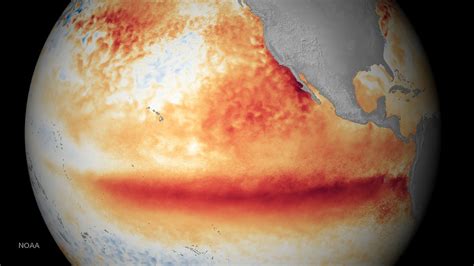
Spend enough time near the ocean and you might stop seeing it as scenery. It starts to look more like a circulatory system, moving heat, carbon, weather and life around the planet, quietly holding conditions steady enough for everything else to carry on. The ocean absorbs more than ninety percent of the excess heat our emissions trap, and around a quarter of the carbon. When people say the climate is changing, what they often mean, without quite realising it, is that the ocean is changing first.
You might expect that to put the ocean at the centre of how we talk about the future would make a lot of sense. Mostly, that doesn't happen. And the reason is not a lack of science. We know an extraordinary amount about how marine systems work, how they break down, and how they recover. The harder truth, the one Ozeaon was built around, is that knowledge has never been the bottleneck.
One system, not three
It helps to stop treating the ocean, the climate and the land as separate subjects. They behave as one connected system, and some of the most useful ideas live exactly where they meet.
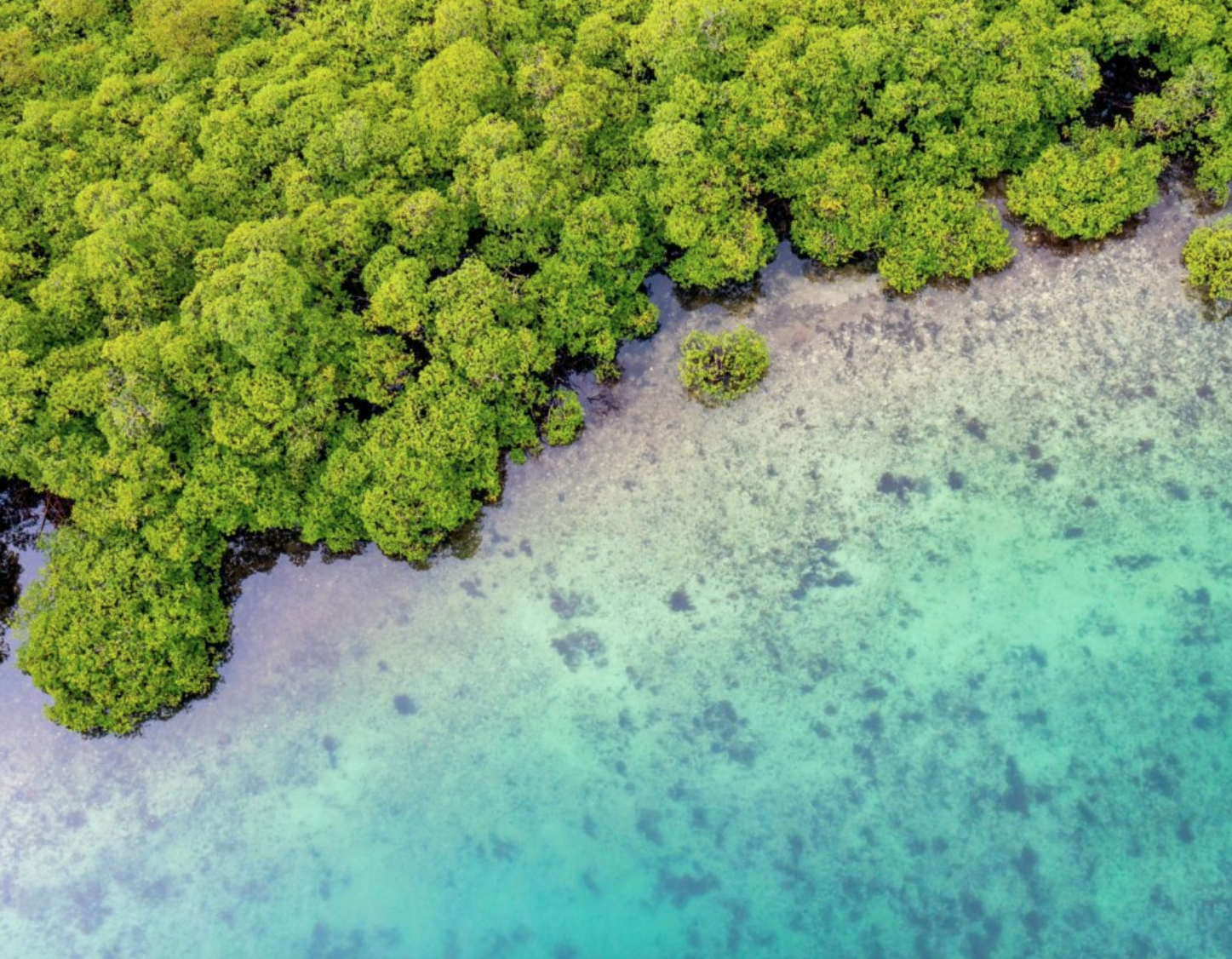
Coastal ecosystems are a good place to start. Mangroves, seagrass meadows, salt marshes and kelp forests (sometimes called seaforests) pull carbon out of the atmosphere faster than forests on land, while sheltering coastlines, feeding fisheries and supporting an astonishing density of life. Restoring and protecting them is one of the most effective climate actions available, and it isn't speculative. It works now.
Move a little further and the connections multiply. Regenerative ocean farming, which grows kelp and shellfish together, produces food while cleaning the water it grows in and easing local acidification. Seaweed becomes the raw material for bioplastics, fertilisers and feed. Algae-based soil treatments improve drought resistance on farms inland, while seaweed grown offshore can absorb the very nutrient run-off that those farms send back to the sea. A small amount of red seaweed in cattle feed measurably cuts methane. Pollution on land becomes a resource in the water; a problem in one place quietly becomes a solution in another.
None of this is a distant promise. The possibilities within the ocean-climate-land nexus already exist, scattered across labs, farms, papers and pilot projects. What's missing is what happens next.
Continuity is the thing we keep losing
Here is the pattern anyone working in this space eventually notices. Someone learns something in one place. They publish it somewhere else. They collaborate informally, in a group chat or a hallway. When it's time to find money, they start again from scratch, in front of people who have never heard of them. Effort doesn't accumulate. Reputation doesn't carry. Trust resets every single time.
The result is a strange kind of waste, not of ideas or talent but of momentum. A researcher's work reaches the forty people already in their field and stops. A capable graduate has the understanding to contribute but no obvious way in. A founder building something genuinely regenerative can't get funded because they don't fit the pitch-deck mould, and the people who would understand the work never see it.
That gap (between knowing and doing, between contribution and credibility) is what Ozeaon exists to close. Not by adding another course, another feed, or another place to file things away, but by making the whole cycle hold together.
So what is Ozeaon?
Ozeaon is a regenerative knowledge and impact ecosystem focused on ocean and climate challenges. In plainer terms: it brings open education, scientific knowledge, collaboration and funding into one place, and connects them so that effort compounds instead of evaporating.
I once described the ambition as "Google meets Oxford on a trip to Italy." By that I meant something accessible and easy to move through, rigorous and trustworthy, and unashamedly human, cultural and beautiful. That mix matters. Plenty of climate platforms are technical but cold, or inspiring but vague. Ozeaon is trying to be accessible without being shallow, and rigorous without being elitist.
Underneath, it runs on a simple sequence: knowledge leads to contribution, contribution earns trust, and trust opens the door to funding and real-world impact. Each step leaves a trace. Nothing meaningful disappears. The technology that makes this possible (open science infrastructure, community validation, transparent governance) stays in the background, where infrastructure belongs. It's there to keep trust and value from resetting, not to be the headline.
Who it's for, and what they actually do
Ozeaon isn't built for a single type of person. It's built for the way people move through this work over time, entering as learners, becoming contributors, and sometimes going on to build, fund or govern. Rather than ask who are you, it asks what are you here to do right now. Three modes describe most of it:
Learn. "I want to understand and explore." This is the calm front door. Open educational resources, drawn from trusted scientific repositories, are summarised into clear explanations and linked back to the original data and full papers. Structured learning paths replace the overwhelm of "too many courses" with something that actually goes somewhere. This is where the curious learner (the student who has read enough to feel the weight of the problem but not yet found a way in) can move from following the conversation to taking part in it.
Build and contribute. "I want to create and collaborate." This is the working environment. Researchers and educators can publish without waiting for institutional permission, with quality emerging through open peer feedback and collective validation rather than gatekeeping. The Projects hub lets people propose regenerative initiatives, like a mangrove restoration, an algae-food pilot or a coastal monitoring effort, and find collaborators and funding. A bounties system turns smaller tasks like data collection, peer review or making a tutorial into recognised, rewarded contributions. For the researcher tired of writing only for peers, work stays rigorous but finally starts to circulate, be questioned, and be used.
Fund and govern. "I want to support and direct impact." This is the considered, accountable side. Funders, ESG teams and institutions can use the platform as a discovery and due-diligence layer, backing initiatives whose credibility has been built in the open rather than asserted in a brochure. Governance is shared: people earn a say through participation, organised into themed groups (an Ocean-Climate Pod, a Food and Biomaterials Pod, a Health and Wellbeing Pod, and so on and so forth) where members help decide what gets supported. For the builder who needs trust before capital, funding becomes a continuation of relationships already formed through the work, rather than a leap of faith.
These aren't rigid categories. Most people drift between them as their relationship with the work deepens, which is rather the point.
Why this approach, and not another platform
Ozeaon is deliberately not trying to be everything to everyone, and it's openly sceptical of the things that have made people distrust this space: greenwashing, performative impact, technology pushed for its own sake, and credibility handed out by title rather than earned by contribution. It treats Indigenous and local knowledge as serious science, not decoration. It measures success in health, resilience and shared futures, and it tracks the social benefits of projects alongside the environmental ones, so that impact is something you can actually see rather than something a report claims.
The early focus is narrow on purpose, beginning with universities, organisations and institutions as living laboratories, where learners, researchers and credibility already gather, and proving the full loop in one place before opening it wider. Depth before scale.
It's worth being honest that this asks something of people. The value isn't instant; it accumulates. You have to take part to get it. But that's the trade at the heart of the whole idea: effort here is meant to be an investment, not a transaction.
We already know a great deal about how to keep the ocean (and the climate that depends on it) alive. The work now is less about discovering more and more about building the conditions in which good ideas are allowed to stay, grow and mature. Ozeaon is one attempt at those conditions: a place where learning leads somewhere, contribution is taken seriously, and curiosity is given long enough to become impact.
That's not a promise of salvation. It's something steadier: collective stewardship, made structurally possible, for a planet worth keeping liveable.
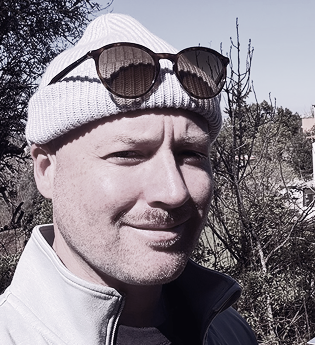
Joseph Flynn
Founder & CEO
Joseph Flynn is the Founder and CEO of Ozeaon, where he leads the development of a digital platform designed to connect knowledge, participation, and funding for regenerative innovation. His work sits at the intersection of environmental resilience, human wellbeing, open science, emerging technologies, art and regenerative systems design.
- UN Ocean Decade Project Lead
- Impact Leaders Alliance Founding Member
- Certified Blue Economist
- Master of Design for Health & Wellbeing
- Master of Contemporary Art
- ReFi & AI Talent
- Climate Reality Leader