Hope for the Future: Dr. Sylvia Earle on Taking Action to Protect the Ocean
Through the words of oceanographer Dr. Sylvia Earle, we can learn how to protect and respectfully appreciate the ocean to the fullest.
By Agnese Rossi
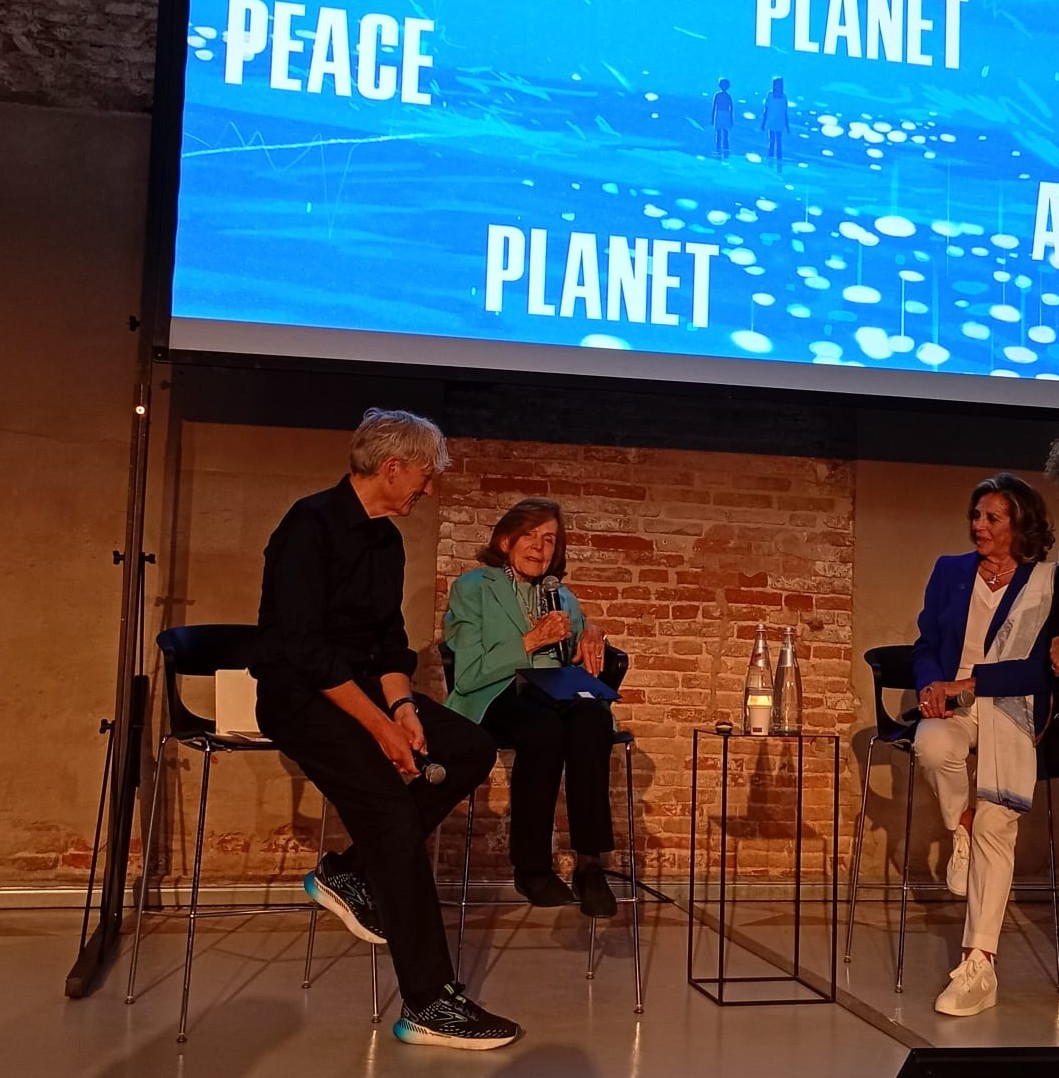
“This is the future. You know this planet that we call home: it's a blue planet. We are by nature terrestrial, but it is this blue planet that makes our existence possible.” Sylvia Earle at Planet Aqua, Planet Peace, Ocean Space, Venice.
Few people know the ocean as intimately as oceanographer Dr. Sylvia Earle. Over a lifetime of exploration, she has led more than 100 expeditions and devoted her life to uncovering the secrets of the underwater world. This gave her access to a front-row seat to the devastating effects that human activity has had - and continues to have - on the marine environment. In fact, while the new discoveries regarding the (still) mysterious world of the abyss were unthinkable in the past century, we also collected losses, being left with what seems more and more like ruins of a past submarine world full of riches and diversity. Despite this, her speech is full of hope, a contagious hope that entices everyone who listens to her to care for our “life support system”, as she often refers to the ocean.
“Thinking about the incredible ability to explore the water part of the planet is such a gift. People could not do what you can do nowadays. It's getting better all the time.
Anybody can fly in an airplane. Some people can go to the moon. They can go to Mars. But some places on this earth are still hidden.”
The ocean is becoming more acidic. There’s plastic in it, with all its toxins influencing the chemistry of the seas. And we are also taking out a lot from the ocean, treating marine biodiversity as commodities to sell, profiting on the deaths of many beings that we tend to undervalue.
“There is so much that has been lost so far. But we do have a chance, now that we know, to look at what is happening to the coral reefs disappearing, the trash filling the ocean in ways that we didn't think possible. When I was a child, there were no plastics. Today, plastics are everywhere. Now we know, now we can change. Now we understand that what is good can sometimes be overdone.”
That is why we have to create a connection to the ocean. Until we don’t feel that connection, until we don’t see the interdependence between us human beings and the whole ocean ecosystem, we won’t be able to care for it enough and we will always be on the right path to decline. The ocean shouldn’t be a source of income for industries. It should be protected as a part of us, as if our lives depend on it - because they really do. Our exploitation of the resources we continuously find beneath the sea is devastating entire populations of fishes and sea creatures, disrupting whole cycles of nutrients in the ocean.
“In order to change, we can’t just look at what we're putting into the ocean, but also what we're taking out. We are extracting wildlife on a scale that we know cannot be sustained. It's one thing to take food for your family, for yourself. We did that with birds. We did that with animals on the land. We're taking wildlife in the same way that we once took creatures from close to where we live. Now we're taking creatures from high in the Arctic, from the Antarctic. We're taking wildlife in ways that suit the economy, but we're killing nature. We have to rethink. Sharks are the creatures that I used to be afraid of most when I dived in the ocean. People said: sharks are dangerous. Watch out for sharks. But now, my fear is that of going into a sea where sharks no longer exist.
We almost exterminated the great whales, but we stopped. That's good news. There's more to whales than money. There's more to whales than meat and oil. They have a lot from which we can learn. The whole world, the natural world. We have a chance, maybe the best chance that we will ever have, to protect nature and protect ourselves.
Coral reefs are not just coral. The whole ecosystem: forests are not just trees. They're full of various parts of life. Turtle soup tastes good, but a live turtle is more important than a dead turtle.”
Dr. Earle’s words are full of hope for a future generation that is committed to caring for other living beings and the world we share with them. So if these words haven’t inspired you to be curious about and respectful of the marine ecosystem, it’s hard to imagine what will.
‘This time, the 21st century, we are the luckiest people who ever existed. Right at the time when we are on the edge of losing so much, we have the best chance to build security and protect the systems that keep us alive.’
Agnese Rossi
Journalistic Content Intern
Agnese Rossi supports public engagement at Ozeaon, helping strengthen the company's audience-facing communication, community outreach, and public visibility.
Her role contributes to how Ozeaon engages external audiences through accessible storytelling and mission-aligned content.
- Journalism
- Communications
- Public Engagement